
Medical Insights
Ebola DRC: An Introductory Briefing
Author: Dr Simon Worrell
Download briefing PDF · 2 pages ↗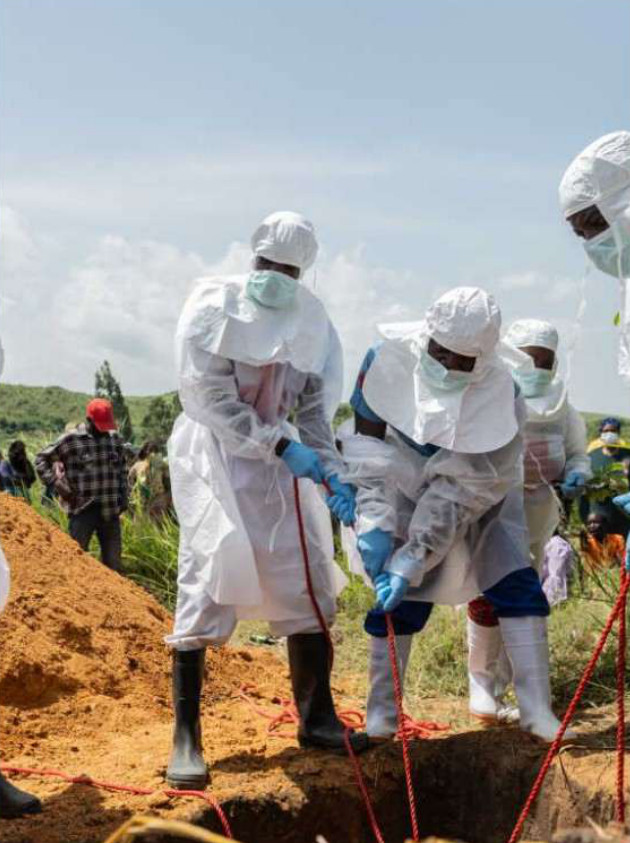
The recent outbreak of Ebola in the DRC highlights the complexities of dealing with recurring severe outbreaks in challenging locations affected by conflict, local healthcare beliefs, and bordering several adjacent countries.
Ebola is the infectious disease that engenders the most apprehension amongst the public, patients, and even physicians. It’s the quintessential ‘killer bug’ of the tabloid headlines as it is often fatal in around 50% of cases, causing death by uncontrolled bleeding. Even for those that survive, there are post-Ebola syndromes that can occur, causing further suffering.
The present outbreak in the DRC is far from their first, but it is their largest. Officially affecting around 7,000 people resulting in 3500 deaths. Being certain about case numbers is challenging for several reasons. Firstly, Eastern DRC is a complex area to work in, local infrastructure is challenging. Moreover, as cases have travelled across borders to adjacent countries, diagnosing and collating information is difficult. Added to this, is there is often local resistance to identification of cases: once identified, infected loved ones must be taken into quarantine and often never seen again. Lastly, as treating Ebola effectively usually leads to severe curtailment of traditional cultural practices, such practices tend to persist underground or recur swiftly leading to continued or renewed Ebola infections. For example, we’ve known for many years that traditional funeral practices are often the cause of continued infections. This is because of the culturally important preparation of the deceased, involving close contact with relatives as they wash and make ready their loved one. Although in most contexts Ebola is generally quite difficult to catch, much more difficult than COVID or the measles, in this setting of intimate care, infection is much easier and has often led to rises in case numbers.
We’ve seen much of this before. Across many past Ebola outbreaks throughout sub-Saharan Africa. And we’ve learned much to help. But in each outbreak there are great obstacles to overcome. In the DRC, especially in the Eastern provinces, effective responses to previous outbreaks have been hindered by rebel activity and cross-border transmission. In addition, the co-incidence of other local infections makes diagnosis difficult without specialised tests. Tests not immediately available locally. One such disease is malaria; much more prevalent than Ebola and often also extremely serious. Confusing Ebola with malaria has devastating consequences. Both can present with common symptoms such as headache, fever, and muscle ache - but treatment and management are radically different. To add a further complexity, as malaria is so common, those with Ebola can also be infected with malaria. Once one diagnosis has been made, there may also be others.
What is relatively new is the strain of the Ebola responsible for this outbreak. It’s called the Bundibugyo strain and has been uncommon in the region. There is no specific vaccine as yet. There has been concern that the vaccines that have been produced to earlier Ebola outbreaks would thus not be effective if used during this epidemic. And it’s certainly true that this might be the case. However, we know that if a vaccine is prepared against a virus which is similar but not exactly the same, it can often still provide some protection. And with Ebola, any protection might mean the difference between life and death. This effect of a vaccination to a similar virus causing partial protection is called cross-reactivity. We have seen this in immunisation to several diseases; from the coronavirus to the flu. In fact, a trial aiming to give partial protection to those immunised with a vaccine from a previous Ebola outbreak strain, has just commenced in the DRC. It is hoped that at least some reduction in infection rate or severity of symptoms will result. Potentially saving lives.