
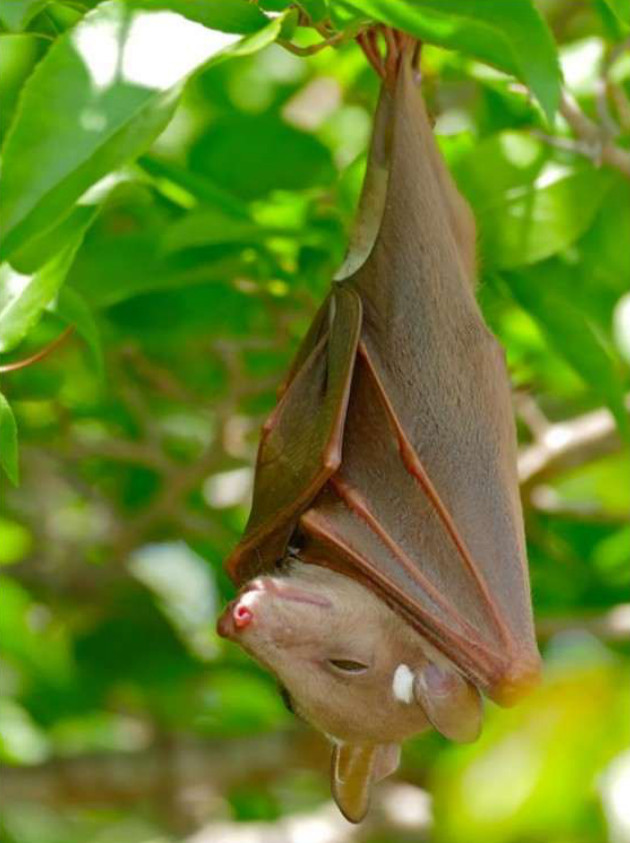
Named after the Ebola river in the Democratic Republic of Congo, where an early outbreak occurred, this disease is a very serious viral illness of Central and Western Africa that has a mortality rate of around 50%. Fruit bats are the natural host of the Ebola virus but the virus can infect animals such as pigs, antelopes and monkeys. Humans who are involved in the slaughter of these animals or have eaten their poorly prepared meat can become infected. Human to human transmission can then occur by close contact with bodily fluids of infected individuals.
At first a flu-like illness occurs which is difficult to distinguish from many other tropical illnesses, such as malaria. A multi-system involvement ensues over the next few days producing a critical clinical picture requiring intensive therapy. As the virus is very infectious, specialised equipment is required to protect the patients’ healthcare workers from being infected. Such protection (PPE) is often not routinely used if Ebola is not suspected, meaning that especially at the beginning of an outbreak those caring for patients often catch the illness and are counted amongst its casualties. In addition, one mistake with donning or doffing the PPE can be fatal.
Vaccine production has been an important issue in previous Ebola outbreaks. As there are several subtypes of Ebola, creating a vaccine specific for each subtype has been an important consideration. Each species is named after the location of its first outbreak. There are 4 principle sub-types: Ebola, Sudan, Bundibugyo and Taï Forest. During the largest outbreak of Ebola, which occurred in West Africa from 2014-2016, the first vaccination was trialled. A ring-fencing technique was used whereby once a patient was identified, their close-contacts would be vaccinated, followed by the close-contacts of the close-contacts. This strategy proved effective and is in use to this day in certain outbreaks.
Even following survival, patients can often be subject to on-going symptoms from a post-Ebola syndrome. This can involve the nervous system, muscles and joints, producing vision difficulties, joint pain, headache and cognitive decline. Although symptoms can wane after a number of years, patients are often left debilitated for a considerable time. As the Ebola virus can still survive in remote parts of the body into which the immune system has poor access, a small degree of viral replication causing symptoms can persist after the main infection has abated. Added to this, is often an exaggerated ongoing immune response to the original infection, causing inflammation and adding to the patient’s problems.
Paradoxically, Ebola causes very few symptoms in its natural host, the fruit bat. It is only when the virus is found in another animal that these catastrophic results ensue. There are many examples where viruses can calmly co-exist with their host. It is only if there is a poor ‘fit’ between them that true disease occurs. In humans, there are viruses in this category. Viruses that are largely unknown outside of medical circles as few symptoms occur following infection. Cytomegalovirus, for example, is thought to infect at least 60% of the world’s population, causing few issues. It is when our immune system falters, as with taking transplantation medication or following HIV infection, that serious consequences can follow. In this way, CMV is to us, what Ebola is to the fruit bat.